

Origin: https://mp.weixin.qq.com/s/E9xgWcYBtbKnE7vFf_yWBQ
【导读】2026年11月,亚太经合组织(APEC)领导人非正式会议将在深圳举行。与APEC诞生之初全球化高歌猛进的时代相比,今天的亚太地区已处在完全不同的国际环境之中:贸易和供应链问题日益被安全化,半导体等新兴产业也从经济增长的新动能,转变为大国竞争中的战略资产。与此同时,阵营化和“小圈子”合作趋势上升,区域经济一体化与地缘政治分裂并行,绿色转型、能源安全等议题也在不断重塑亚太合作议程。
在IPP荣誉教授梅赫里·马达尔沙希(Mehri Madarshahi)看来,2026年深圳APEC峰会预计将围绕贸易碎片化、数字治理与人工智能、区域经济一体化等议题展开讨论。但从更深层次看,2026深圳APEC峰会所面对的,并不只是贸易或技术问题,还有世界上最重要经济区域之一未来秩序的塑造问题。在她看来,深圳峰会将显示,在战略分歧不断加深的背景下,亚太主要经济体是否仍然保有足够共同基础,以应对共同挑战、延续区域合作。
2026年深圳APEC:经济合作能否在地缘政治竞争时代延续?
APEC Shenzhen 2026: Can Economic Cooperation Survive an Era of Geopolitical Rivalry?
本文作者:Mehri Madarshahi(梅赫里·马达尔沙希)IPP荣誉教授、联合国教科文组织下属国际创意和可持续发展中心(ICCSD)顾问委员会成员
2026年11月18日至19日,世界各国领导人将齐聚深圳这一中国“创新之都”,出席第33次亚太经合组织(APEC)领导人非正式会议。
On 18-19 November 2026, world leaders will gather in Shenzhen, China’s celebrated innovation hub, for the 33rd Asia-Pacific Economic Cooperation (APEC) Economic Leaders’ Meeting.
从表面上看,这场峰会似乎只是又一次由国家领导人、总理、部长和工商界领袖参加的例行会议。然而,此次会议正值国际事务中一个尤为关键的时刻。随着地缘政治紧张局势加剧、贸易日益政治化、技术竞争不断升温,APEC或许正面临其近四十年前成立以来最重要的一次考验。
On the surface, the summit appears to be another routine gathering of presidents, prime ministers, ministers, and business executives. Yet the event arrives at a particularly significant moment in international affairs. As geopolitical tensions deepen, trade becomes increasingly politicised, and technological competition intensifies, APEC faces perhaps its most important test since its creation nearly four decades ago.
APEC成立于1989年,诞生于一个与当下截然不同的时代。当时,冷战即将结束,全球化进程正在加速,太平洋两岸的政策制定者普遍相信,经济一体化能够促进繁荣与稳定。
Founded in 1989, APEC was born out of a different era. The Cold War was ending, globalisation was accelerating, and policymakers across the Pacific believed that economic integration could foster prosperity and stability.
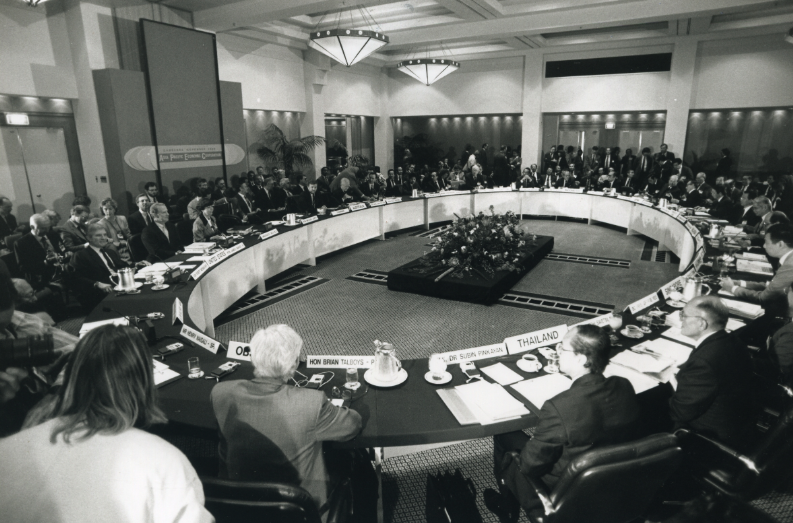
1989年11月6日至7日,来自澳大利亚、文莱达鲁萨兰国、加拿大、印度尼西亚、日本、大韩民国、马来西亚、新西兰、菲律宾、新加坡、泰国和美国的部长们齐聚澳大利亚堪培拉,讨论如何推进亚太经济合作进程。图源:APEC
从国际关系视角看,APEC常被视为“软制度主义”和“开放区域主义”的典型案例。在这一机制下,合作主要通过对话和自愿承诺来推动,而不是依靠法律强制执行。
From an international relations perspective, APEC is often studied as an example of soft institutionalism and open regionalism, where cooperation is encouraged through dialogue and voluntary commitments rather than legal enforcement.
因此,与基于条约的组织不同,APEC从一开始就被设计为一个灵活的论坛,建立在共识、自愿合作和务实解决问题的基础之上。其成员官方称为“经济体”而非国家,整体上涵盖了世界上一些规模最大、活力最强的市场。
Therefore, unlike treaty-based organisations, APEC was designed as a flexible forum built on consensus, voluntary cooperation, and practical problem-solving. Its members, officially referred to as “economies” rather than states, collectively represent some of the world’s largest and most dynamic markets.
多年来,APEC体现了全球化时代的乐观精神。它在不施加具有法律约束力义务的情况下,推动贸易自由化、投资流动、商业互联互通和区域合作。学者们也常将其描述为“开放区域主义”的例证,即一种在不构筑排他性政治或经济集团的前提下寻求经济一体化的模式。
For many years, APEC embodied the optimism of globalisation. It promoted trade liberalisation, investment flows, business connectivity, and regional cooperation without imposing legally binding obligations. Scholars often described it as an example of “open regionalism,” a model that sought economic integration without erecting exclusive political or economic blocs.
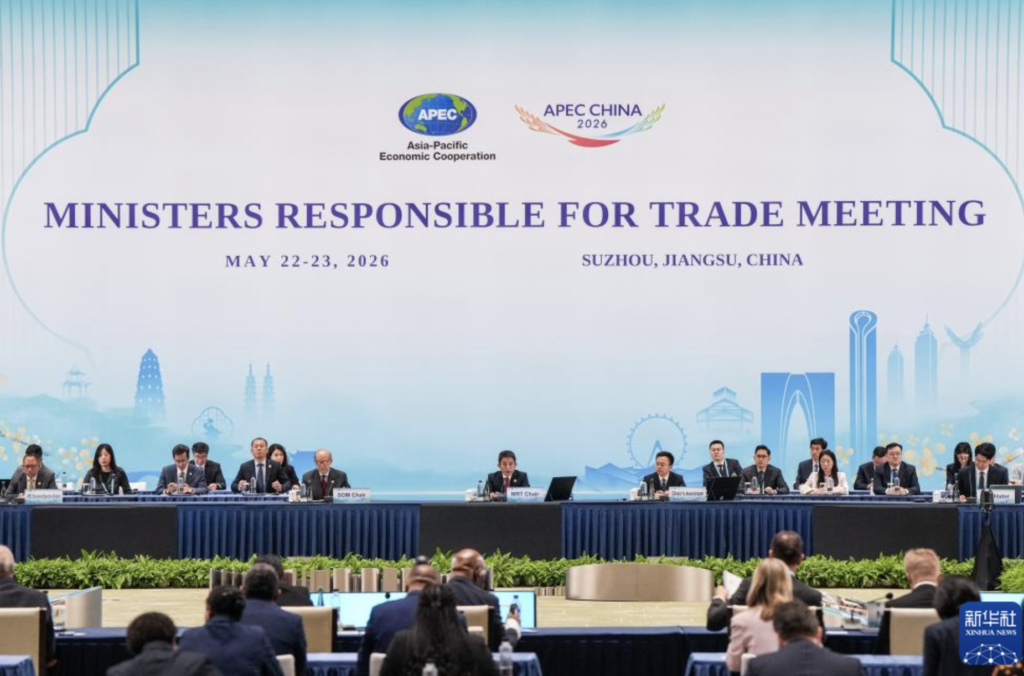
5月22-23日,2026年亚太经合组织贸易部长会议在苏州举行,会议就推进区域经济一体化、支持世贸组织、加强数字合作和发展绿色经济等优先领域开展讨论。图源:新华社
APEC所处环境已发生变化
Different environment surrounding APEC
亚太地区仍是全球经济增长的引擎,但也已成为战略竞争的焦点。中美关系日趋复杂,技术、贸易、安全和产业政策等领域的争端不断凸显。曾经被视为相互依赖象征的供应链,如今越来越多地被置于韧性和国家安全的视角下加以审视。人工智能、半导体和数字平台既是经济工具,也已成为战略资产。
The Asia-Pacific region remains the engine of global economic growth, but it has also become a focal point of strategic competition. Relations between the United States and China have grown increasingly complex, marked by disputes over technology, trade, security, and industrial policy. Supply chains that were once celebrated as symbols of interdependence are now viewed through the lens of resilience and national security. Artificial intelligence, semiconductors, and digital platforms have emerged as strategic assets as much as economic tools.
在这一背景下,2026年APEC会议选择在深圳举办,具有相当重要的象征意义。
Against this backdrop, the decision to host APEC 2026 in Shenzhen carries considerable symbolism.
深圳为何具有重要意义
Why Shenzhen Is Significant
很少有城市能比深圳更好地代表中国的经济转型。四十年前,深圳还是一个毗邻香港的小渔村。如今,它已成为全球技术、先进制造、金融和创新中心。作为中国最早设立的经济特区之一,深圳成为经济改革和对外开放的试验场。深圳的转型也常被视为开放、投资和市场化发展所带来益处的生动体现。
Few cities better represent China’s economic transformation. Four decades ago, Shenzhen was a small fishing community bordering Hong Kong. Today it is a global centre of technology, advanced manufacturing, finance, and innovation. As one of China’s first Special Economic Zones, Shenzhen became a laboratory for economic reform and international engagement. Its transformation has often been presented as a tangible demonstration of the benefits of openness, investment, and market-oriented development.
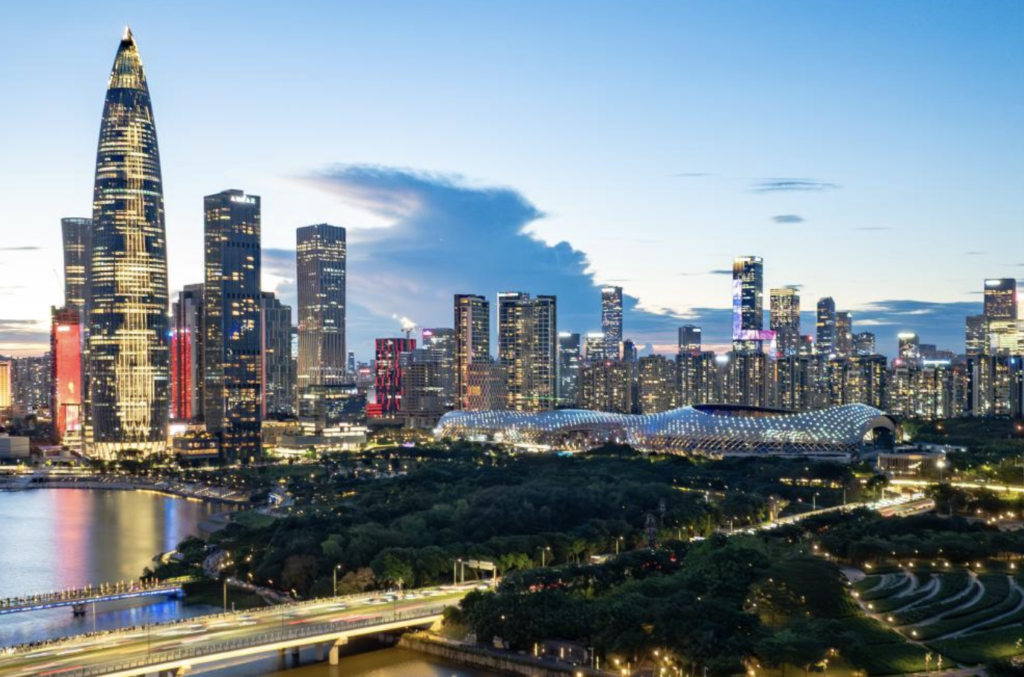
继上海、北京之后,深圳成为中国“APEC第三城”,彰显城市硬核实力,更承载着特殊的使命与意义。图源:新华社
因此,选择深圳作为举办地释放出明确的信号。中国将这座城市与创新、开放以及未来经济转型等主题联系起来。毋庸置疑,中国希望展现的形象,不仅是一个主要经济大国,也是区域经济合作和技术创新的倡导者。此次峰会的主题——“建设亚太共同体,促进共同繁荣”——正体现了这一雄心。
The choice of Shenzhen, therefore, sends a clear message. Chinese officials have explicitly linked the city to themes of innovation, openness, and future economic transformation. Needless to say that, China seeks to present itself not only as a major economic power but also as a champion of regional economic cooperation and technological innovation. The summit’s theme- “Building an Asia-Pacific Community to Prosper Together”-reflects this ambition.
峰会可能讨论的主要议题
Likely issues to be considered at the summit
首先,贸易碎片化仍将是一个核心关切。亚太地区各国政府正试图在经济效率与战略安全之间取得平衡。政策制定者越来越多地谈论“去风险”,而不是完全“脱钩”,但这对供应链、投资模式和区域一体化究竟意味着什么,仍存在不确定性。APEC是少数几个能够跨越意识形态和政治分歧讨论这些挑战的论坛之一。
First, trade fragmentation will remain a central concern.Governments across the region are attempting to balance economic efficiency with strategic security. Policymakers increasingly speak of “de-risking” rather than complete decoupling, yet the practical implications for supply chains, investment patterns, and regional integration remain uncertain. APEC provides one of the few forums where these challenges can be discussed across ideological and political divides.
其次,数字治理和人工智能预计将受到前所未有的关注。围绕数据流动、网络安全、人工智能监管和数字贸易的问题,已经成为影响经济增长的基础性议题。尽管各国政府在监管路径上往往存在分歧,但整个地区的企业界仍持续呼吁提高互操作性,并建立共同标准。
Second, digital governance and artificial intelligence are expected to receive unprecedented attention. Questions surrounding data flows, cybersecurity, AI regulation, and digital trade have become fundamental issues for economic growth. While governments often disagree on regulatory approaches, businesses throughout the region continue to demand greater interoperability and common standards.
第三,区域经济一体化仍是一项未竟事业。数十年来,APEC一直推动建立亚太自由贸易区这一长期愿景。尽管进展并不均衡,但这一目标体现了一种更广泛的共识,即地区繁荣有赖于保持开放的经济通道。真正的挑战在于,在地缘政治紧张局势加剧的背景下,这种一体化应如何继续推进。
Third, regional economic integration remains unfinished business. For decades, APEC has promoted the long-term vision of a Free Trade Area of the Asia-Pacific. Although progress has been uneven, the ambition reflects a broader recognition that prosperity in the region depends on maintaining open economic channels. The challenge is determining how such integration can proceed amid rising geopolitical tensions.
最后,可持续和包容性增长仍将是重要主题。气候适应、能源转型、小企业发展和劳动力转型已成为日益紧迫的政策优先事项。单纯的经济增长已不再足够,各国政府正面临压力,需要证明繁荣可以同时兼具环境可持续性和社会包容性。
Finally, sustainable and inclusive growth will remain important themes. Climate adaptation, energy transition, small-business development, and workforce transformation have become increasingly urgent policy priorities. Economic growth alone is no longer viewed as sufficient; governments are under pressure to demonstrate that prosperity can be both environmentally sustainable and socially inclusive.
关于经济相互依赖的问题
Questions on economic interdependence
APEC面临的更深层问题在于,经济合作是否仍能在国际关系中发挥稳定作用。从历史上看,该组织的运行建立在这样一种假设之上:经济相互依赖将鼓励合作并减少冲突。如今,许多观察人士认为,地缘政治正越来越多地塑造经济,而不是由经济反过来影响地缘政治。
The deeper question facing APEC is whether economic cooperation can still serve as a stabilising force in international relations. Historically, the organisation operated on the assumption that economic interdependence would encourage collaboration and reduce conflict. Today, many observers argue that geopolitics is increasingly shaping economics rather than the other way around.
这种转变并不必然削弱APEC的相关性。事实上,它反而可能增强APEC的重要性。在正式外交渠道常常受到牵制的时期,APEC仍是少数几个能够让太平洋两岸领导人、部长和工商界人士开展持续对话的平台之一。APEC的非正式性曾被批评为一种弱点,如今却可能成为其最大的优势之一。
This shift does not necessarily diminish APEC’s relevance. In fact, it may enhance it. At a time when formal diplomatic channels are often strained, APEC remains one of the few venues where leaders, ministers, and business communities from across the Pacific can engage in sustained dialogue. Its informality, once criticised as a weakness, may prove to be one of its greatest strengths.
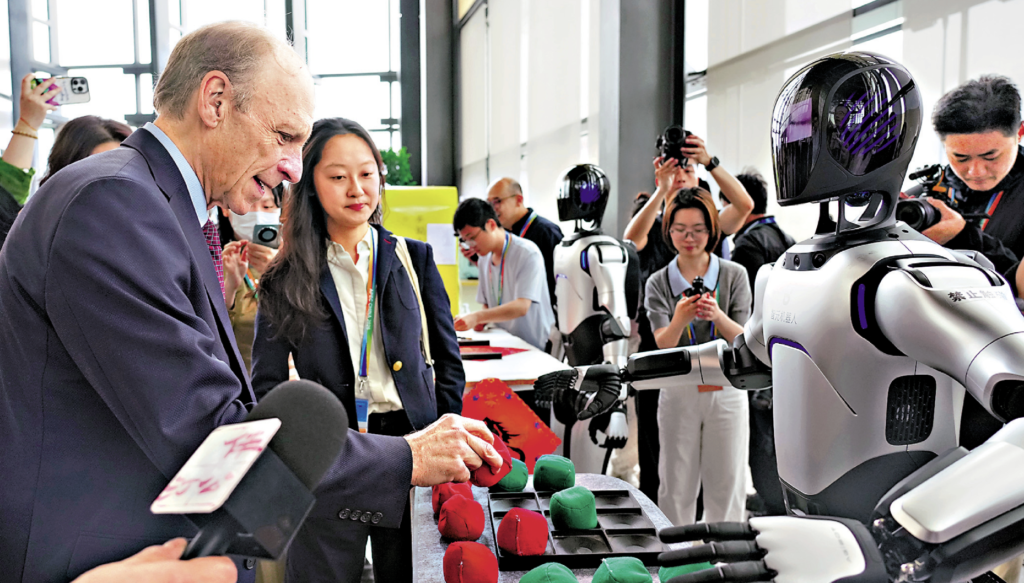
5月18日,2026年亚太经合组织(APEC)第二次高官会开幕式在上海举行。图为参会高官与中国人形机器人下棋互动。图源:中新社
因此,深圳峰会不只是一场外交聚会。它也是一次检验:在一个日益碎片化的世界中,亚太地区能否继续保有一个合作框架。峰会成果不太可能带来戏剧性突破,也不太可能形成具有法律约束力的协议。然而,其意义并不在于此。此次峰会将显示,尽管战略分歧不断扩大,本地区主要经济体是否仍拥有足够共同基础来应对集体性挑战。
The Shenzhen summit is therefore more than a diplomatic gathering. It is a test of whether the Asia-Pacific can preserve a framework for cooperation in an increasingly fragmented world. The outcome is unlikely to produce dramatic breakthroughs or legally binding agreements. Yet its significance lies elsewhere. The summit will reveal whether the region’s major economies still share enough common ground to address collective challenges despite their growing strategic differences.
从这个意义上说,2026年深圳APEC不仅关乎贸易或技术,更关乎世界最重要经济区域的地区秩序未来。合作能否与竞争共存,或许将成为21世纪最具决定性的问题之一,而深圳将为围绕这一问题展开讨论提供一个重要舞台。
In that sense, APEC Shenzhen 2026 is not merely about trade or technology. It is about the future of regional order in the world’s most economically important region. Whether cooperation can coexist with competition may be one of the defining questions of the twenty-first century, and Shenzhen will provide an important stage on which that question is debated.